カテゴリー: サービス一覧

  • A Network That Keeps Operating Even Under Wartime Conditions

    A Network That Keeps Operating Even Under Wartime Conditions

    A Network That Keeps Operating Even Under Wartime Conditions

    Concept: Security Events Directly Trigger Network Path Control

    In environments where service continuity is critical, the network must be able to continue operating even when key infrastructure components become compromised, overloaded, or untrusted.
    This design proposes a mechanism in which security-relevant syslog events act as triggers for immediate and deterministic network path changes.

    When predefined security conditions are met, an automated control sequence modifies VRRP priority values to shift the active gateway role to an alternate firewall or IPS device from a different vendor.
    This allows the network to continue operating while isolating or bypassing potentially compromised equipment.

    The intent is not only failover for availability, but failover for trust preservation.

    Architecture Overview

    The system consists of four logical layers:

    1. Event Detection Layer
      Security-related syslog messages are received from firewalls, IPS devices, and core infrastructure.
      Only specific, pre-correlated events are treated as actionable triggers.
    2. Decision Layer
      A control host—preconfigured and isolated—evaluates whether the received events meet the threshold for failover.
      Conditions may include:
      • Severity level
      • Repetition count
      • Source correlation
      • Time window thresholds
    3. Control Execution Layer
      Once validated, an automated macro or scripted control process connects to network devices and modifies VRRP priority values.
      This forces the gateway role to migrate from the primary security appliance to an alternate vendor’s firewall or IPS path.
    4. Stability and Recovery Layer
      To prevent oscillation or repeated failover:
      • Cooldown timers are applied
      • Manual confirmation may be required for restoration
      • Health checks confirm stability before reverting

    Why VRRP Priority Manipulation

    VRRP provides a deterministic and vendor-neutral mechanism for gateway role selection.
    By adjusting priority values instead of shutting down interfaces, the system can:

    • Preserve routing consistency
    • Maintain predictable failover timing
    • Avoid full routing reconvergence
    • Keep recovery reversible

    This approach allows failover logic to be externally controlled while still relying on standard L3 redundancy protocols.

    Cross-Vendor Failover as a Security Strategy

    Traditional high-availability designs assume identical hardware pairs.
    However, in adversarial conditions, homogeneous redundancy can become a liability.

    A heterogeneous security path offers:

    • Reduced single-vendor attack surface
    • Independent firmware and control planes
    • Divergent vulnerability profiles
    • Operational resilience against targeted exploits

    Failing over from one vendor’s device to another is not only redundancy—it is defense diversity.

    Control Point Design Considerations

    The control host that initiates VRRP changes must be:

    • Isolated from general user networks
    • Hardened and access-restricted
    • Able to operate even during partial infrastructure failure
    • Capable of manual override

    Automation should assist the operator, not replace situational awareness.
    The system is designed so that human authority remains intact even during automated transitions.

    Operational Safeguards

    To ensure stability, the following safeguards are recommended:

    • Event correlation instead of single-log triggers
    • Rate limiting of failover actions
    • Mandatory cooldown intervals
    • Verification of post-failover reachability
    • Logging of all control actions

    Failover should be decisive, but never impulsive.

    Trigger Conditions Example

    A failover may be initiated only when all of the following are true:

    • Multiple high-severity security logs detected
    • Consistent source or signature pattern
    • Threshold exceeded within defined time window
    • Primary path health check fails or becomes uncertain

    This reduces the risk of malicious or accidental triggering.

    Recovery Philosophy

    Automatic restoration to the original path should be conservative.
    In uncertain environments, stability outweighs symmetry.
    Manual verification before restoring original priority values ensures that compromised components are not prematurely trusted again.

    Intended Use Cases

    Intended Use Cases

    • Critical infrastructure networks
    • Research environments requiring continuity
    • Multi-vendor security architectures
    • Remote or constrained operational sites
    • Situations where physical intervention is delayed

    The goal is not militarization, but survivability:
    a network that continues to function even when trust in individual components is temporarily lost.

    Conclusion

    A network that keeps operating under extreme conditions must be able to change its own structure in response to threats.
    By combining security event detection with controlled VRRP priority manipulation, the network gains the ability to reconfigure itself without full outage.

    Resilience is not merely redundancy.
    It is the capacity to adapt while still moving forward.

    “`html

    Technical Inquiry

    If this article relates to your network architecture, security design, or infrastructure modernization, feel free to contact us.

    Email:
    contact@g-i-t.jp


    Related Architecture Solutions

    Typical network architecture solutions designed and implemented by GIT. These patterns are derived from real enterprise environments and long-term operational experience.

    View Network Architecture Solutions
    Back to Home

    “`

  • Heartbeat2CIO

    Heartbeat2CIO

    Heartbeat2CIO

    Continuous Normality Reporting, Delivered Directly to the CIO

    Direct from Network Devices to the CIO — With Regional Employment Built In

    Core Concept

    The CIO Personally Monitors Normality

    Heartbeat signals from network devices are delivered directly to the CIO.

    This allows the CIO to state with confidence:

    “I personally monitor system normality at all times.”

    The system provides continuous proof of operational awareness at the executive level.

    Direct Device-to-CIO Architecture

    Syslog for Events, Ping for Heartbeat

    Network devices communicate directly with Heartbeat2CIO.

    • Syslog reports real events
    • Ping confirms ongoing reachability
    • Combined, they form a reliable heartbeat

    No intermediate interpretation layer is required.

    CIO Participation in Development (DX Positioning)

    Not a Tool Bought Somewhere — A System the CIO Helped Build

    Heartbeat2CIO supports a governance model in which the CIO can state at a shareholder meeting:

    “This is not a tool we simply purchased.
    It was implemented as part of our DX initiative,
    and I personally participated in its design and development.”

    By positioning the system as a DX support effort rather than a generic purchased tool,
    the organization demonstrates:

    • Executive ownership
    • Direct accountability
    • Technical understanding at the leadership level
    • Transparent governance

    This strengthens credibility with shareholders and stakeholders.

    Minimal Monitoring Infrastructure

    No Monitoring Staff Required for Observation

    Heartbeat2CIO removes the need for:

    • Dedicated monitoring teams
    • Large NOC environments
    • Heavy monitoring platforms

    The CIO receives direct signals from the network itself.

    Physical Maintenance Still Matters

    Hardware Replacement Requires People

    When devices must be replaced in a data center,

    human intervention is still necessary.

    Hardware maintenance cannot be automated away.
    This is not a flaw — it is a feature.

    Regional Employment Creation

    Supporting Jobs in Local Cities

    Physical device replacement and on-site support

    create meaningful employment opportunities
    in regional and local cities.

    Heartbeat2CIO reduces unnecessary monitoring labor
    while preserving essential, skilled on-site work.

    This encourages:

    • Regional technical employment
    • Sustainable operational models
    • Clear division between monitoring and maintenance

    Heartbeat Message Model

    Normal, Lost, Recovered

    Three message types are sent directly to the CIO:

    Normal:
    Regular heartbeat confirms systems are operating normally.

    Heartbeat Lost:
    Sent when expected signals stop.

    Recovered:
    Sent automatically when systems return to normal.

    This provides continuous situational awareness.

    Monitoring Beyond Management IP

    Observing All Operational Addresses

    Heartbeat2CIO monitors more than management interfaces.

    It can observe:

    • Management IPs
    • Core network IPs
    • Service gateways
    • External reachability references

    This ensures real operational visibility.

    Executive-Level Communication

    Clear and Actionable Messages

    Notifications are designed for CIO-level clarity:

    • All systems normal
    • Heartbeat stopped
    • Network restored

    No unnecessary technical jargon.
    Only decision-relevant information.

    Shareholder Communication Value

    A Verifiable Operational Statement

    The CIO can confidently say:

    “System normality is continuously monitored and reported directly to me.”

    Heartbeat logs provide supporting evidence for governance and reporting.

    Product Positioning

    Lightweight Shareware for Real Accountability

    Heartbeat2CIO is designed as:

    • Windows-native
    • Lightweight
    • Direct email-based reporting
    • Minimal configuration
    • Low-cost shareware (~500 JPY) or freeware

    It enables executive accountability without heavy infrastructure.

    Operational Philosophy

    Reduce Noise, Preserve Essential Work

    Monitoring overhead is reduced.

    Essential on-site technical work remains.

    This balances efficiency with employment sustainability.

    Technical Foundation

    Built on Direct Device Signals

    Heartbeat2CIO relies on direct signals from network devices

    while allowing optional lightweight backend collectors.

    The visible system remains simple and transparent.

    Final Principle

    If the Heartbeat Stops, the CIO Knows

    Monitoring is direct.

    Maintenance remains human.
    Regional employment is supported.

    “`html

    Technical Inquiry

    If this article relates to your network architecture, security design, or infrastructure modernization, feel free to contact us.

    Email:
    contact@g-i-t.jp


    Related Architecture Solutions

    Typical network architecture solutions designed and implemented by GIT. These patterns are derived from real enterprise environments and long-term operational experience.

    View Network Architecture Solutions
    Back to Home

    “`

  • Network Architecture That Eliminates Unnecessary Business Trip

    Network Architecture That Eliminates Unnecessary Business Trip

    ※日本国内案件については、元請けITベンダー様経由での技術支援を基本としています。
    Stop flying engineers. Fix the network.

    Network Architecture That Eliminates Unnecessary Business Trip

    Slash Travel Costs with Network Design

    K.K. GIT designs and implements network architectures
    that reduce travel, lower OPEX, and enable reliable
    remote operations across Japan.

    If engineers need to travel just to deploy routers
    or capture packets, the issue is not geography.
    It is network architecture.

    We help organizations operating in Japan build
    remote-first networks that support diagnostics,
    deployment, and expansion without unnecessary dispatch.

    Our work combines architecture design and
    implementation support, ensuring that networks
    function correctly in real operations.

    Eliminate Nationwide Travel with Remote Layer-3 Design

    In one environment, engineers were traveling nationwide
    to install routers at each new site.

    K.K. GIT redesigned the network using structured
    Layer-3 segmentation and remote activation planning.

    New locations could be brought online by creating SVIs
    on existing infrastructure.

    No site visit required.
    No travel booking.
    No rollout delay.

    Travel cost dropped immediately, and nationwide rollout
    became predictable and fast.

    This is not convenience automation.
    This is architecture designed for remote operations
    at scale.

    Stop Business Trip Engineers Just to Capture Packets

    In another case, an engineer traveled on-site
    only to run a packet capture.

    The distance was within Tokyo.

    The visit revealed the real issue:
    the network required physical presence
    for basic diagnostics.

    K.K. GIT redesigned the environment to support:

    • remote diagnostics
    • structured capture points
    • pre-deployment validation
    • remote troubleshooting
    • operational visibility
    • immediate reduction in travel cost
    • lower OPEX
    • faster site rollout
    • reduced operational overhead
    • improved diagnostic response time
    • scalable remote operations

    After redesign, diagnostics could be performed
    remotely, without dispatch.

    Appendix: Declining Cost Performance Caused by Leaving PCs Underpowered

    Many clients continue using PCs with insufficient performance.
    The inevitable result is delayed work.
    Unnecessary labor (overtime pay) and outsourcing costs increase, and your company’s credibility declines as a consequence.

    Designed for Companies Operating in Japan

    K.K. GIT supports:

    • foreign-owned companies in Japan
    • English-speaking IT teams
    • distributed offices
    • CIOs managing nationwide operations

    Our goal is simple:

    Reduce travel.
    Increase control.
    Stabilize operations.

    Remote-First Network Operations

    K.K. GIT designs and supports networks that enable:

    • remote operations from day one
    • reduced travel cost
    • nationwide rollout without dispatch
    • Layer-3 segmentation
    • implementation-ready architecture
    • fast remote diagnostics
    • predictable deployment

    We understand the operational cost structure
    of running infrastructure across Japanese regions
    and the friction caused by unnecessary site visits.

    Every unnecessary trip is a design failure.
    We fix the design.

    Outcomes for CIOs and Leadership

    Organizations working with K.K. GIT typically see:

    Network growth should not require proportional
    growth in travel.

    When expansion increases dispatch frequency,
    the architecture must be reconsidered.

    Contact

    K.K. GIT
    Tokyo, Japan

    For architecture review, redesign, or
    implementation support:
    +

    “`html

    Technical Inquiry

    If this article relates to your network architecture, security design, or infrastructure modernization, feel free to contact us.

    Email:
    contact@g-i-t.jp


    Related Architecture Solutions

    Typical network architecture solutions designed and implemented by GIT. These patterns are derived from real enterprise environments and long-term operational experience.

    View Network Architecture Solutions
    Back to Home

    “`

  • Direct signal path from network infrastructure to executive decision.

    Direct signal path from network infrastructure to executive decision.

    Direct signal path from network infrastructure to executive decision.

    Vendor-neutral network & security engineering with custom internal tooling.

    We design infrastructure and build the tools that operate inside it.

    Vendor-neutral network & security engineering — plus custom internal tools

    We provide vendor-neutral network and security architecture, troubleshooting, and implementation support. When off-the-shelf tooling is too heavy, too indirect, or not allowed in restricted environments, we also build lightweight internal applications that deliver direct operational signals.

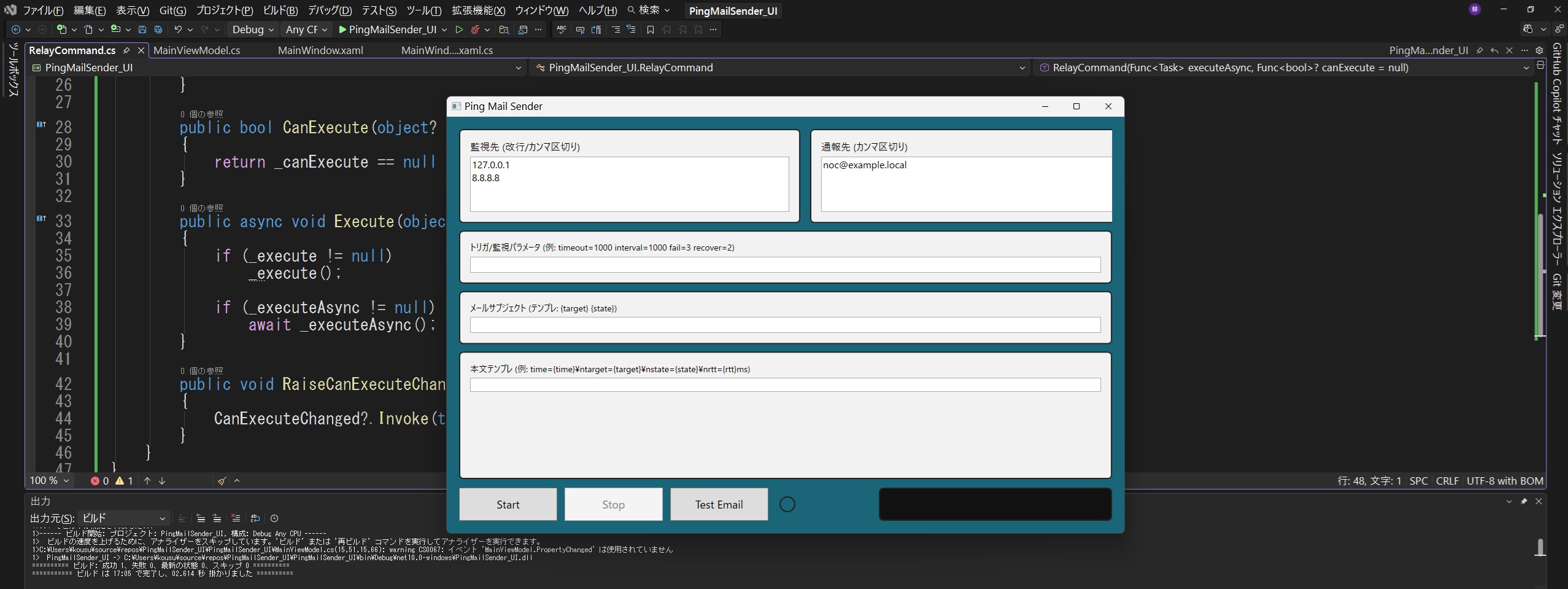
    Example: Windows Ping Monitoring & SMTP Alert Application

    This Windows desktop application performs continuous Ping monitoring and sends email alerts via an internal SMTP relay. It is designed for environments where external monitoring SaaS, cloud dependencies, or third-party APIs are not acceptable.

    What this page proves

    • We can design monitoring logic that operators can trust (DOWN / RECOVER)
    • We can build Windows desktop software (WPF) tailored to your workflow
    • We can integrate cleanly with internal infrastructure (SMTP relay)
    • We deliver evidence-driven outputs (reproducible checks and logs)

    Where this approach fits

    • Security-restricted or closed networks
    • On-premise / factory / isolated infrastructure
    • Environments that require auditable, minimal tooling
    • Teams that need direct signals rather than another dashboard

    Core capabilities

    • Vendor-neutral network & security architecture (enterprise)
    • Troubleshooting with reproducible verification and clear documentation
    • Custom internal monitoring/alert applications
    • Automation tools for operations teams

    How we typically engage

    • Assessment: requirements, constraints, threat model, and operational workflow
    • Design: architecture, alert policy, and verification plan
    • Implementation: configuration + custom tooling where needed
    • Handover: operational documentation and reproducible evidence

    Contact us to discuss constraints, requirements, and a verification plan.

    Example: Python Syslog Monitoring & SMTP Alert Tool

    In addition to Windows desktop applications, we also build lightweight internal automation tools in Python. This example monitors Syslog messages, detects specific patterns, and sends email notifications via an internal SMTP relay. It is designed for environments where reliability, auditability, and low operational overhead matter more than dashboards.

    What it does

    • Receives Syslog (UDP/TCP) and writes logs to a file
    • Matches defined patterns (keywords / regex) in near real time
    • Sends email alerts through an internal SMTP relay
    • Supports multiple alert rules and destinations
    • Runs as a small, auditable service inside closed networks

    Why this approach

    Many organizations already have Syslog flowing across their infrastructure, but incident visibility is often delayed by tooling complexity or operational friction. We build tools that reduce time-to-signal by turning raw events into actionable notifications without external dependencies.

    Typical environments

    • Security-restricted or isolated networks
    • On-premise infrastructure and appliances
    • Operational teams that need direct signals (mail) instead of dashboards
    • Situations where SIEM integration is not feasible or not desired

    Key capabilities we deliver

    • Vendor-neutral network and security engineering
    • Automation and tooling for incident detection and response
    • SMTP-based internal notification routing
    • Evidence-driven troubleshooting and reproducible test logs

    Contact

    Contact us to discuss constraints, requirements, and a verification plan.

    These tools are typically delivered alongside network and security design engagements.

    “`html

    Technical Inquiry

    If this article relates to your network architecture, security design, or infrastructure modernization, feel free to contact us.

    Email:
    contact@g-i-t.jp


    Related Architecture Solutions

    Typical network architecture solutions designed and implemented by GIT. These patterns are derived from real enterprise environments and long-term operational experience.

    View Network Architecture Solutions
    Back to Home

    “`

  • CIO Value Demonstration Through Reproduction Test Logs and Analytical Findings

    CIO Value Demonstration Through Reproduction Test Logs and Analytical Findings

    CIO Value Demonstration Through Reproduction Test Logs and Analytical Findings

    Design sample:
    Send alert notifications and normal-status reports from the health check to separate email addresses.
    This makes it possible to continuously confirm that the “normality reports” themselves have not stopped arriving.
    CIO leadership and accountability will be clearly demonstrated at the shareholders’ meeting through the submission of reproduction test logs and their analytical findings.
    These materials will be packaged to emphasize the CIO’s raison d’être, positioning the effort not as one-sided advice from our company but as a collaborative undertaking.
    By presenting jointly validated evidence and analysis, the package highlights the CIO’s strategic role, decision-making authority, and measurable contribution to organizational governance.

    DX Support for Generative AI Usage

    We provide DX support services.
    We offer consultation on how to use generative AI for program design and for interpreting machine logs.

    We do not rely on MIB polling or generic SIEM noise.
    When something truly matters, CIOs sends an email to themselves, in their own words.

    This design eliminates translation layers between systems and decision-makers.
    It produces fewer alerts, but every alert is actionable.

    A lightweight Python CLI monitors raw syslog output and sends direct email notifications when meaningful patterns appear.

    No abstraction.
    No alert fatigue.
    No dependency on large monitoring platforms.

    Only signals that reach the person responsible.

    Python-Based Syslog Monitoring Without MIB

    Build a Syslog Monitoring Server in Python and Send Email Alerts on Specific Log Matches

    Design Philosophy: Single-File Python CLI Tool

    Python is treated as a CLI utility.
    All configuration is hard-coded directly inside the script.

    Reasons:

    • Fast deployment
    • No external config files to lose
    • Immediate on-site editing
    • Easy integration with cron or systemd

    Syslog reception is handled by rsyslog or similar.
    Python simply monitors the resulting log file.

    Architecture:

    Network devices → syslog → rsyslog → text log  

    Python monitor

    Email alert

    Minimal Implementation: One-File CLI Script

    No external dependencies.
    Standard library only.

    !/usr/bin/env python3

    import os
    import re
    import time
    import smtplib
    import ssl
    from email.message import EmailMessage

    LOG_PATH = “/var/log/remote-syslog.log”

    PATTERNS = [
    re.compile(r”\bCRITICAL\b”, re.IGNORECASE),
    re.compile(r”\bERROR\b”, re.IGNORECASE),
    re.compile(r”\bFAILED\b”, re.IGNORECASE),
    re.compile(r”\bBGP\b.*\b(down|reset|flap)\b”, re.IGNORECASE),
    ]

    COOLDOWN_SEC = 60

    SMTP_HOST = “smtp.example.com”
    SMTP_PORT = 587
    SMTP_USER = “alert@example.com”
    SMTP_PASS = “PASSWORD”

    MAIL_FROM = “alert@example.com”
    MAIL_TO = [“you@example.com”]
    SUBJECT_PREFIX = “[SYSLOG-ALERT]”

    POLL_INTERVAL_SEC = 0.3
    READ_FROM_START = False

    _last_sent = {}

    def send_mail(subject, body):
    msg = EmailMessage()
    msg[“From”] = MAIL_FROM
    msg[“To”] = “, “.join(MAIL_TO)
    msg[“Subject”] = subject
    msg.set_content(body)

    with smtplib.SMTP(SMTP_HOST, SMTP_PORT) as s:
        s.starttls(context=ssl.create_default_context())
        s.login(SMTP_USER, SMTP_PASS)
        s.send_message(msg)

    def follow_file(path):
    while True:
    try:
    f = open(path, “r”, encoding=”utf-8″, errors=”replace”)
    break
    except FileNotFoundError:
    time.sleep(1)

    if READ_FROM_START:
        f.seek(0)
    else:
        f.seek(0, os.SEEK_END)
    
    inode = os.fstat(f.fileno()).st_ino
    
    while True:
        line = f.readline()
        if line:
            yield line.rstrip("\n")
            continue
    
        time.sleep(POLL_INTERVAL_SEC)
    
        try:
            st = os.stat(path)
            if st.st_ino != inode:
                f.close()
                f = open(path, "r", encoding="utf-8", errors="replace")
                inode = os.fstat(f.fileno()).st_ino
                f.seek(0)
        except FileNotFoundError:
            pass

    def main():
    for line in follow_file(LOG_PATH):
    now = time.time()
    for pat in PATTERNS:
    if pat.search(line):
    last = _last_sent.get(pat.pattern, 0)
    if now – last < COOLDOWN_SEC:
    continue
    _last_sent[pat.pattern] = now

                subject = f"{SUBJECT_PREFIX} {pat.pattern}"
                body = line
    
                send_mail(subject, body)
                break

    if name == “main“:
    main()

    Execution

    chmod +x syslog_alert.py
    ./syslog_alert.py

    OR

    python3 syslog_alert.py

    For persistent operation, run via systemd.

    Where This Design Fits

    This approach is ideal for:

    • FortiGate log monitoring
    • Cisco BGP flap detection
    • IDS alert forwarding
    • NOC monitoring
    • Lab environments
    • Rapid troubleshooting
    “`html

    Technical Inquiry

    If this article relates to your network architecture, security design, or infrastructure modernization, feel free to contact us.

    Email:
    contact@g-i-t.jp


    Related Architecture Solutions

    Typical network architecture solutions designed and implemented by GIT. These patterns are derived from real enterprise environments and long-term operational experience.

    View Network Architecture Solutions
    Back to Home

    “`

  • Personal Heuristics for WBS Optimization

    Personal Heuristics for WBS Optimization

    Personal Heuristics for WBS Optimization

    Disclaimer

    The following items are based on personal field experience. They are presented as practical heuristics rather than formal theory.

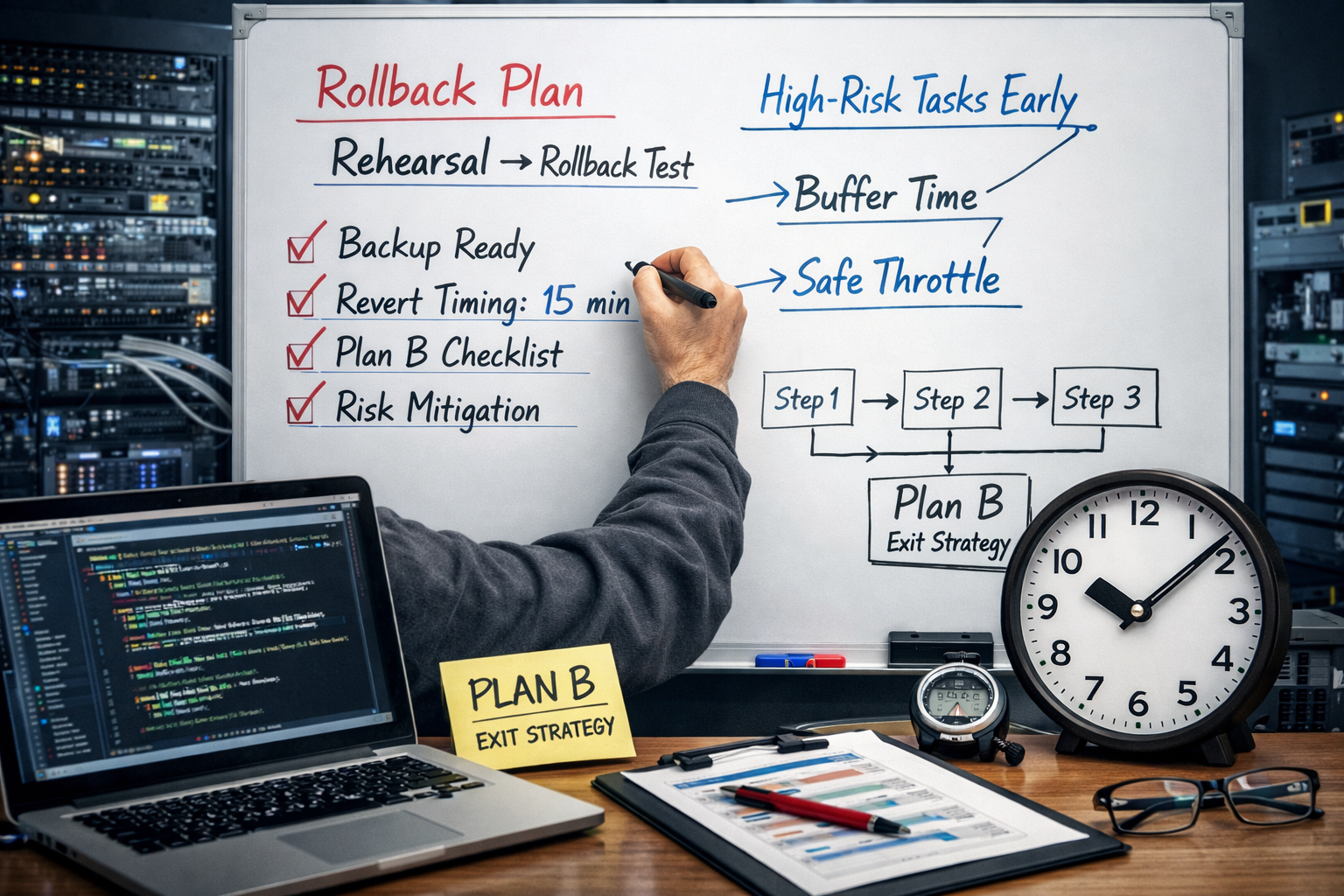
    Always Rehearse with a Planned Rollback

    When performing a rehearsal, we assume from the outset that a rollback will occur. The rehearsal is executed with a predefined rollback plan, and we verify in advance not only the rollback procedure itself but also the accuracy of the estimated rollback duration.

    This ensures that when a real rollback is required, both the method and the time required are already validated.

    Execute Risky Tasks Early in the Process

    High-risk tasks are intentionally placed in the early stages of the workflow.

    Because fewer changes have accumulated at that point, the rollback scope remains small. This allows rollback operations to be performed rapidly and accurately if needed.

    Allocate Generous Time Buffers in Early Steps

    We assign larger time buffers to preceding steps.

    As work progresses, unused buffer time accumulates. This creates increasing temporal and psychological margin, allowing the team to operate with greater stability and clarity as the project advances.

    Maintain a Sustainable Throttle Margin

    Our guiding principle is:

    Prepare for trouble in advance.
    Do not run at full throttle.
    Maintain the throttle setting that allows the longest possible range.

    Rather than pushing systems or teams at maximum capacity, we operate at a sustainable level that preserves maneuverability. This ensures that when unexpected issues occur, there is always room to respond, adjust, and recover without loss of control.

    “`html

    Technical Inquiry

    If this article relates to your network architecture, security design, or infrastructure modernization, feel free to contact us.

    Email:
    contact@g-i-t.jp


    Related Architecture Solutions

    Typical network architecture solutions designed and implemented by GIT. These patterns are derived from real enterprise environments and long-term operational experience.

    View Network Architecture Solutions
    Back to Home

    “`

  • Proven Troubleshooting and Recovery Cases in Enterprise Networks

    Proven Troubleshooting and Recovery Cases in Enterprise Networks

    ※日本国内案件については、元請けITベンダー様経由での技術支援を基本としています。
    Proven Troubleshooting and Recovery Cases in Enterprise Networks

    Proven Network Troubleshooting Cases

    These network troubleshooting cases were resolved in enterprise production environments.

    Cisco SD-WAN

    We resolved operational limitations in Cisco SD-WAN environments by introducing automation.

    Tasks difficult to perform through the GUI were implemented using Python.
    Legacy TeraMacro procedures were translated into Python using generative AI, including automated configuration backup operations.

    To prevent operational mistakes, a safety mechanism was implemented:
    if the expected management IP address does not exist in the configuration, the script automatically stops.

    All intellectual property must remain with the client.
    Therefore, we use client-owned generative-AI environments when generating scripts.

    Any modern tool must be usable by anyone.
    If only specialists can operate it, it has limited value.
    TeraMacro training costs are extremely low.People simply buy used routers on Yahoo Auctions (typically only a few thousand yen).

    During pre-deployment validation, we discovered that the legacy BGP command “allow-as in” cannot be implemented in SD-WAN.
    We resolved this using redistribution and route filtering.

    IOS-XE 9200/9300 Switching

    We resolved an issue where the command
    “no spanning-tree vlan xx”
    could not be applied.

    The issue was solved using BPDU filter and BPDU guard.
    Other members had been unable to resolve it before our intervention.

    AWS

    When web filtering was enabled, uploads failed with a probability of roughly 19 out of 20 attempts.

    Root cause:

    • Global IP changed mid-session due to virtual server relocation
    • Non-DNS-based algorithm
    • Packet fragmentation preventing Layer-7 inspection

    This was confirmed through packet capture analysis.

    VPN / IPsec

    We identified incorrect hardware selection in a failed data-leak-prevention deployment.

    We resolved a billing-related issue in an on-demand VPN circuit where packets continued arriving after communication completion due to IPsec confirmation behavior.

    We also resolved:

    • QoS not functioning with IPsec
    • MTU issues caused by key-length changes
    • Customer concerns about unencrypted voice packets (disproved through waveform analysis)

    Layer 7-2 (Transparent IPS/WAF)

    In transparent IPS/WAF environments, HSRP hello frames and R-STP BPDU frames did not pass by default on certain platforms.

    Impact:

    • HSRP Active-Active state
      I “came up with” the idea on the spot to roll back using an RJ-45 J-J connector.
    • Up to 5 minutes of network outage
      This issue had remained unresolved for three years.

    We also discovered in advance that Auto-MDI becomes disabled when a transparent IPS loses power, which can cause link failure with fixed-speed devices.

    Layer 4-3 (Load Balancers / Firewalls)


    We discovered source-port exhaustion and TIME_WAIT reuse issues when SNAT was enabled on load balancers.

    We also resolved:

    • RedHat memory exhaustion caused by RST-terminated health checks
    • Embryonic timeout issues
    • TraceRoute being SNATed by default
    • Firewall uRPF alerts triggered by TraceRoute

    All confirmed via packet capture.

    Issue: Juniper SRX repeatedly rebooting

    On a Juniper SRX, after initiating a reboot via the serial console and command line, all activity stopped for more than ten minutes.
    I suspected it had frozen and pressed keys on the PC keyboard, but there was no response.
    During that period, the characters I typed (including Enter) accumulated in the PC’s keyboard buffer.
    After a while, the log shows that for a brief moment it displayed: “press any key to reboot.”

    Palo Alto (FW) — Failover Delay Analysis

    The cause of the unexpected time consumed during failover was identified from the physical topology diagram.
    The HA link between the primary and secondary units had been connected through a switch.
    MAC flapping was recorded in the switch logs, indicating that this switch-mediated HA connection was the root cause of the failover delay.

    Key Finding

    The HA link must be directly connected between the primary and secondary units.
    Introducing a switch in between can lead to MAC flapping and increased failover time.

    Layer 3 Routing

    Troubleshooting: QoS, NAT, Stateful NAT, PIM Multicast, and HSRP

    We discovered incorrect QoS + NAT implementation described in Cisco documentation.

    ACLs referencing IP addresses did not produce expected results.
    Using port-based ACLs resolved the issue.

    Wireshark graphs changed from a sawtooth pattern to a straight line, proving QoS effectiveness.

    We also:

    • Identified QoS misconfiguration with priority queue
    • Predicted CPU overload during NAT migration
    • Discovered stateful NAT left unconfigured for five years
    • Confirmed PIM multicast and HSRP interoperability

    Layer 2 Switching

    We proved that some switches configured for untagged VLANs forward all tagged frames regardless of VLAN ID.

    We also:

    • Prevented STP root-bridge takeover during switch addition
    • Resolved multicast MAC conflicts between IGMP and BPDU

    Layer 1 / Wi-Fi / Bluetooth

    We resolved Wi-Fi multicast performance degradation caused by lack of Layer-1 ACK.

    On Cisco WLC, converting multicast to unicast resolved the issue.

    Bluetooth Noise Investigation

    Using the Ukrainian-made spectrum analyzer IT24, we verified and demonstrated that no significant noise was present within the Bluetooth frequency band.

    Crosstalk Issue in AI-Based Noise Cancellation

    Using a phase-inversion analog noise canceller, we suppressed background voices located behind the telephone operator, addressing the crosstalk issue.

    Radio Environment Verification Using a Spectrum Analyzer

    By continuously recording the display and control screen of a Chinese-made spectrum analyzer (RF Explorer) over an extended period, we demonstrated that no interference caused by electromagnetic waves was present in the VIC, aeronautical radio, or weather satellite frequency bands.

    Electromagnetic Leakage Measurement Around Power Systems Using Fluke

    We were asked to assess the risk of potential TEMPEST-type attacks. By leveraging the credibility and measurement capability of Fluke instruments, we demonstrated that no meaningful electromagnetic leakage was occurring from the power systems.

    Gray-Zone Optimization

    By configuring the wireless access point to use right-hand circular polarization, we reduced Wi-Fi interference and channel congestion.

    Exoneration of Suspected Interference Points Using a Noise Generator

    Using a Noise Generator manufactured by Japan’s CosmoWave, we demonstrated that the cause of the VoIP communication issues was not electromagnetic interference.

    Verifying Server Power Supply Redundancy Using Power Line Communication (PLC)

    We measure and confirm whether primary and secondary power redundancy is properly established by using PLC (Power Line Communication) as a diagnostic tool.

    Work in Progress: 10 GHz Band & Future Wi-Fi Measurement Prototype

    • Early prototype for a 10 GHz-band measurement platform
      Development is underway for a measurement device targeting the 10 GHz range, with a roadmap toward future Wi-Fi analysis and verification tools. The goal is to establish a practical, field-deployable measurement environment rather than a purely laboratory-grade instrument.
    • Hardware status
      • LNB (Low-Noise Block converter) already procured and validated for integration.
      • Bias-T circuit currently under soldering optimization and impedance tuning for stable DC feed and RF isolation.
    • Purpose of this prototype
      This pre-production model is intended to support high-frequency evaluation, signal-path verification, and future expansion toward professional Wi-Fi measurement workflows. It is being built with a vendor-neutral design philosophy and a focus on real-world troubleshooting scenarios.
    • Next steps
      • Finalize Bias-T assembly and stability testing.
      • Integrate LNB with measurement chain.
      • Validate repeatability and noise characteristics.
      • Prepare for extension into Wi-Fi measurement use cases.

    Status: Ongoing engineering work. Detailed specifications will be published after verification.

    “`html

    Technical Inquiry

    If this article relates to your network architecture, security design, or infrastructure modernization, feel free to contact us.

    Email:
    contact@g-i-t.jp


    Related Architecture Solutions

    Typical network architecture solutions designed and implemented by GIT. These patterns are derived from real enterprise environments and long-term operational experience.

    View Network Architecture Solutions
    Back to Home

    “`

  • Deploying Satellite Internet in Areas with Unstable Power

    Deploying Satellite Internet in Areas with Unstable Power

    Deploying Satellite Internet in Areas with Unstable Power

    Satellite Internet Deployment in Unstable Power Environments

    BGP convergence is slow. Therefore, an overlay is used. For validation, in-house CML (SD-WAN) assets are used. Since it was purchased as individual components, there is no receipt stating that a “server” was bought.

    Starlink as Experimental Infrastructure

    As shown on other pages (e.g., RTP jitter measured with Wireshark and the output of show ntp associations detail), the quality is simply poor. In theory, only payload-redundant UDP—namely QUIC—seems usable.

    This lab supports satellite connectivity deployment in regions with unstable power infrastructure.

    The SD-WAN validation lab is currently being built on Cisco CML.
    During preparation, a dual-boot Ubuntu/Windows environment was tested.
    After two weeks of operation, boot instability and unexpected behavior were observed.
    The current system state is documented below.
    This machine is not a production system and is used solely for architecture validation and field-failure simulation.

    After approximately two hours of continuous input (“y” key), the system stopped accepting further commands, including reboot. The current state of the Ubuntu dual-boot test environment is documented below.

    This machine is part of an SD-WAN validation lab using Cisco CML and is not a production system.

    Power Failure Scenarios and Router Design

    On CML, a large Layer 2 network is built using VXLAN.
    Frequent power outages cause the carrier’s backup power to be consumed frequently.
    Assume that the transportation infrastructure has also not kept pace.
    It is expected that the power supply for communications networks will be given lower priority than that of medical facilities.

    Why This Is Not a Primary Line

    Because the theoretical performance cannot be expected. Subjective impressions are unnecessary for validation.

    Field-Ready Configuration Strategy

    CML will be set up, but SD-WAN validation may be done first, because publishing concrete Python code has commercial value.

    “`html

    Technical Inquiry

    If this article relates to your network architecture, security design, or infrastructure modernization, feel free to contact us.

    Email:
    contact@g-i-t.jp


    Related Architecture Solutions

    Typical network architecture solutions designed and implemented by GIT. These patterns are derived from real enterprise environments and long-term operational experience.

    View Network Architecture Solutions
    Back to Home

    “`

  • Security: Practical Notes

    Security: Practical Notes

    Security: Practical Notes

    Order Matters More Than Tools

    htmlspecialchars()

    echo htmlspecialchars($s, ENT_QUOTES, ‘UTF-8’);
    If user input is rendered into HTML, run this first.
    That alone removes most XSS risk.

    At output.
    Not during storage.

    Before Any WAF

    Years ago, I focused on selling WAF.

    I was not wrong.
    But I was out of order.

    If an application outputs raw user input,
    a WAF compensates for something that should have been fixed in one line.

    Today, I start here.

    Then we talk about WAF.

    What I Would Do Differently Now

    I once worked with an internal SE team at a client company.

    They were capable.
    They were practical.

    If I had shown them this one line first,
    we could have had an engineering discussion
    instead of a product discussion.

    Not the tools.
    The order.

    Start With One Line

    Expensive security can wait.
    The first line of defense is literally one line.

    htmlspecialchars()

    Everything else comes after.

    Why UI Matters for Security

    Local First, Then Network

    Order Matters More Than Tools

    Start With One Line

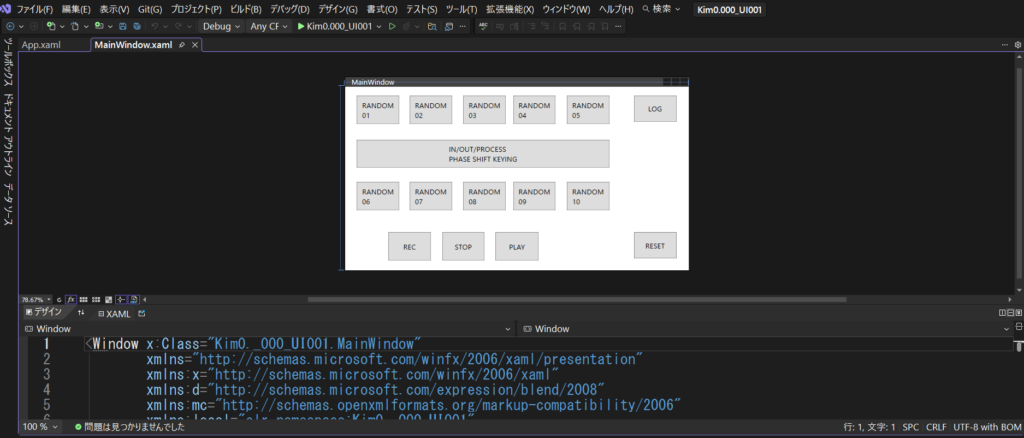
    The UI I Am Building Now

    A Security Tool Should Be Boring

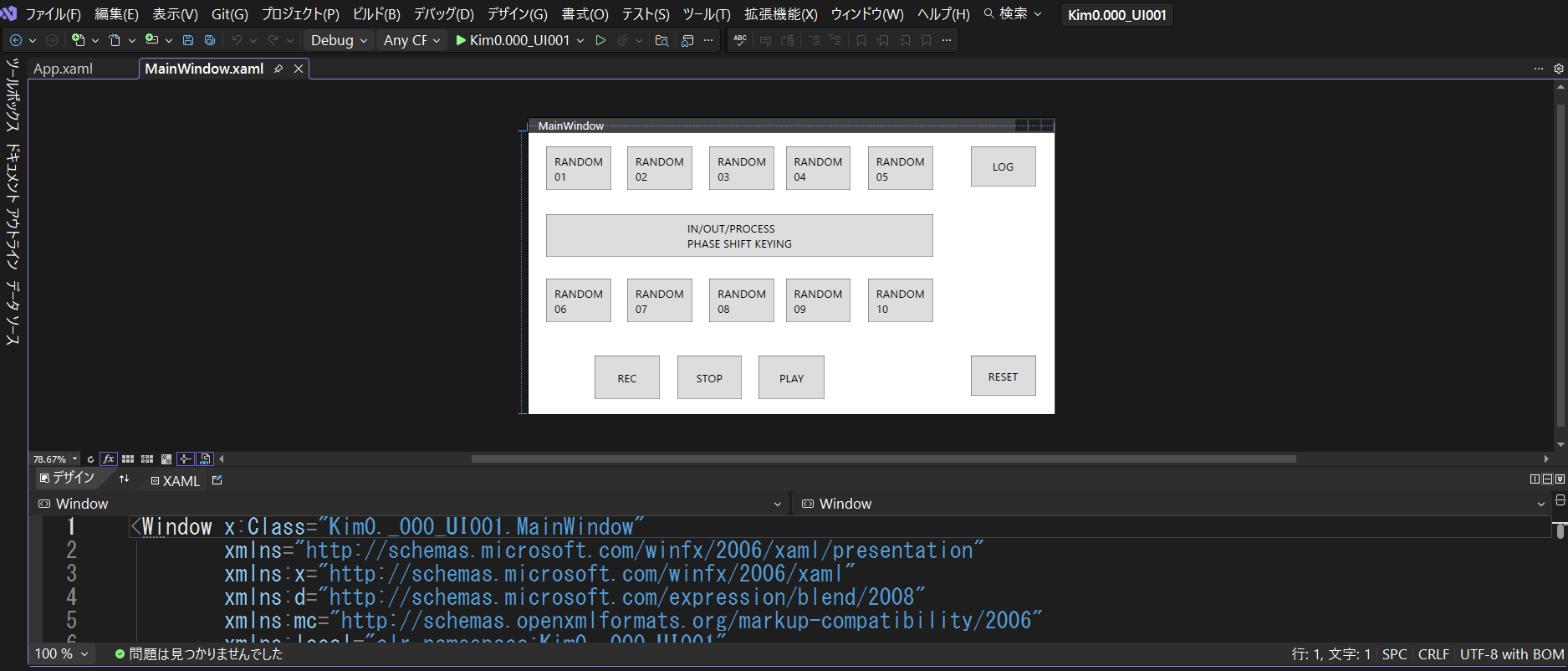
    Early UI prototype.
    Security tools should be simple before they are powerful.

    “`html

    Technical Inquiry

    If this article relates to your network architecture, security design, or infrastructure modernization, feel free to contact us.

    Email:
    contact@g-i-t.jp


    Related Architecture Solutions

    Typical network architecture solutions designed and implemented by GIT. These patterns are derived from real enterprise environments and long-term operational experience.

    View Network Architecture Solutions
    Back to Home

    “`


  • Tips & Tricks

    Tips & Tricks

    Tips & Tricks

    Introducing a Well-Known Freeware Tool

    Content:

    • WinSCP
      • liminates the need for vi.
      • Can be used together with any text editor you are comfortable with.
    • Tera Term
      • Font scaling allows you to enlarge text for better visibility during long CLI sessions.
      • Session logs can be replayed, making it easy to review and reproduce procedures.
      • Supports SCP for secure file transfer between devices and your workstation.

    – ipcalc

    • Calculates subnet ranges.
    • Prevents mistakes caused by manual calculation and brings objectivity to team-based cross-checks.

    – winshot

    • Captures screen snapshots at intervals of at least one second and saves them automatically.
    • Useful for continuously recording control screens from various applications.
    • We primarily use it for Wi-Fi measurement and monitoring.
    • Captured images are compiled into files using PowerPoint macros.
    • Playback can be controlled freely with cursor keys (“forward” / “back”), and the sequence can also be converted into MP4.

    – Python Example (Gray Area)

    • In some cases, information such as a “list of risky IP addresses” is only obtainable via a GUI.
    • Snapshots are taken while scrolling through the interface, then processed with OCR.
    • As this falls into a gray area, the source code is not disclosed.

    IPSENDWIN
    It was convenient for sending and receiving packets with arbitrary MAC addresses and for crafting Layer-7 payloads. However, it appears the API signature has become invalid, and it can no longer be installed at present. It may still work on older versions of Windows.

    Tacacs.net
    Port forwarding on the PC side is required. It took some time before it became usable.

    WinMerge (command-line operation)
    Using command-line options, it is possible to perform high-speed comparisons of large numbers of files and obtain results efficiently.

    Failure Cases Observed in the Field

    • On Cisco devices, the default configuration may sometimes appear as follows:
    line vty 0 4
     login
     transport input none
    
    • In this state, CLI access over the network is denied.
    “`html

    Technical Inquiry

    If this article relates to your network architecture, security design, or infrastructure modernization, feel free to contact us.

    Email:
    contact@g-i-t.jp


    Related Architecture Solutions

    Typical network architecture solutions designed and implemented by GIT. These patterns are derived from real enterprise environments and long-term operational experience.

    View Network Architecture Solutions
    Back to Home

    “`